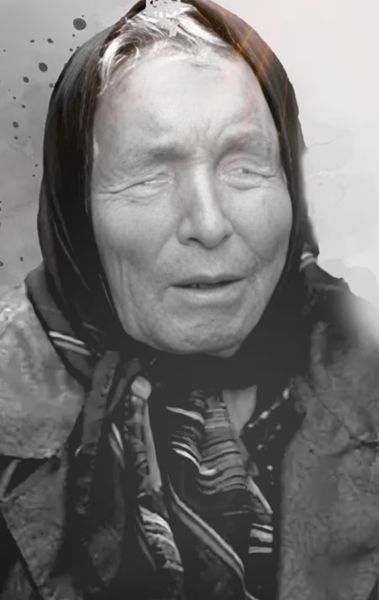


Some Lesser Known Facts About Baba Vanga
- Baba Vanga was born prematurely, as a result of which she was very weak. According to sources, she was so weak that the doctors did not believe that she would survive even a week without continuous care.
- Her mother was criticised a lot after she decided not to give her a Greek name, as back then it was the norm that girls born in the Eastern Ottoman Empire would have Greek names.
- Her mother died when she was just three years old.
- She suffered another setback when her father was conscripted to fight in the First World War, which traumatised her mentally. Thereafter, she left school as the family was not doing well financially.
- Baba Vanga was taken care of by her neighbours as her mother had passed away and her father was fighting the war. She then started living with them.
- She lost all the ancestral property after authorities seized it, as before the First World War, her father was involved in anti-government and pro-Bulgaria activities.
- After the end of the war, Baba’s father returned but was arrested by police officials over allegations of his involvement with the Internal Macedonian Revolutionary Organisation, a banned militant organisation.
- Soon after, he and Baba Vanga escaped the authorities and relocated to Novo Selo in North Macedonia.
- Thereafter, her father remarried.
- Baba Vanga lost her ability to see when she was just 12 years old after she got stuck in a sandstorm in Macedonia. The sand particles entered her eyes, which damaged her nerves.
- She underwent eye surgery three times, out of which the first two failed, and the third was left incomplete due to a lack of money to carry out the operation.
- In 1925, she was sent to Zemun in Belgrade, Serbia, where she enrolled at a school for the differently abled children. There, she learned how to read Braille, knit, cook, clean, and play the piano.
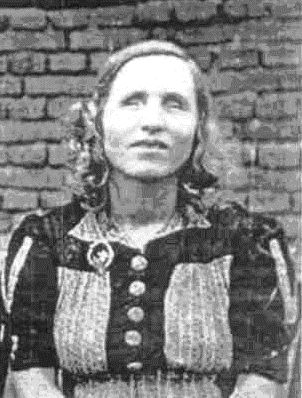
A photo of Baba Vanga taken when she was at the Blind School in Serbia
- She started making predictions about local happenings in just two years of relocating to Zemun.
- In 1928, she returned to her house after her stepmother passed away after a prolonged illness.
- By the time she turned 30, she had started predicting the future and had become a renowned figure in her locality.
- Soon after, her following began increasing, as a result of which many people from around Belgrade started contacting her for consulting.
- In 1939, she became seriously ill after she contracted a form of lung infection called pleurisy. Over time, her situation deteriorated to such an extent that the doctors had given up hope of her survival. However, she recovered eight months after.
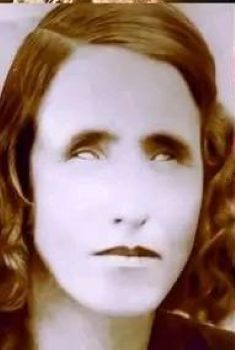
Baba Vanga’s young days photo
- After the beginning of the Second World War, many Belgian citizens approached her to know the whereabouts of their relatives who were fighting in the war.
- During the duration of the war, Tsar Boris III, ruler of the Kingdom of Bulgaria, approached her to ask her about the future.
- Thereafter, Adolf Hitler, dictator of Fascist Germany, sought her guidance during the Second World War. According to sources, after Belgium was captured in 1940, Hitler instructed the German military to find and bring her to him so that he could talk to her about the war and its outcome.
- In 1942, she relocated to Petrich, Bulgaria, after getting married. There, she gained prominence for her predictions.
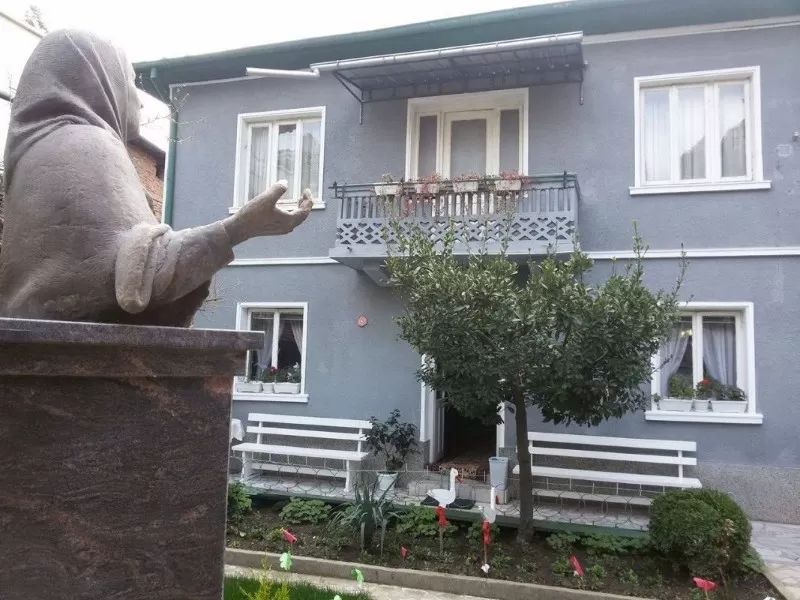
Baba Vanga’s house in Petrich, where she used to live with her husband
- Initially, her family members did not believe that she possessed the power to see into the future; however, after she predicted the death of her brother Vasil at the hands of the Nazi, they started believing her.
- After the end of the Second World War, many leaders of newly independent countries sought her guidance. One of the predictions that she made after the war was the beginning of the Cold War and the arms race between the United States of America and the Soviet Union.
- She also gained prominence as a healer and soothsayer. Many famous and rich German, Polish, and Austrian families started visiting her for consultation. It is also claimed that she healed many German and Italian soldiers who were gravely wounded during the war.
- In May 1942, she relocated to Petrich, southwestern Bulgaria, where she became a prominent figure.
- After the end of the Second World War, there were many claims that the United States attempted to persuade Baba Vanga to move to the US. However, the Soviet Union prevented her from leaving, as Bulgaria became part of the Soviet Union’s Eastern Bloc after the war.
- In 1950, the Bulgarian Police and the secret agencies began working against her to suppress her; however, despite all the attempts, she got visitors who further talked about her capabilities.
- In the early 1960s, Georgi Lozanov, a renowned Bulgarian psychologist and neurologist, approached her to allow him to study her brain mapping. For this, she was also given an opportunity to work in the Institute of Suggestology, which also allowed her to evade the attempts of the Bulgarian authorities to suppress her actions.
- A few years later, when the Bulgarian authorities reduced their pressure on her, she was employed by the Institute of Suggestology (part of the Bulgarian Academy of Sciences), which was run by the Petrich Municipality. There, she received a stipend; however, that money was taken by people who helped her financially at the beginning.
- The institute later accepted her notion that she had special abilities and started to work with her, due to which she gained popularity in Yugoslavia and other parts of Eastern Europe.
- As her fame increased, many people began visiting the institute to seek her guidance. The local authorities even charged a nominal fee from the visitors, as registering before meeting Baba Vanga was a must. While the locals were charged 10 lev, foreigners had to pay three times that amount.
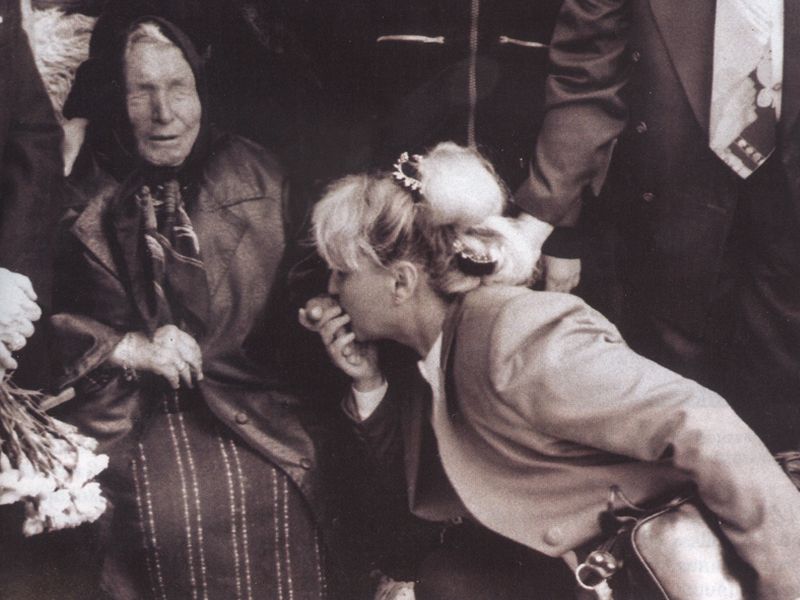
Baba Vanga being greeted by a well-known Bulgarian personality after she moved to Petrich
- The first book in which Baba was talked about extensively was titled Psychic Discoveries Behind the Iron Curtain, which was published in 1970.
- In 1977, the Government of Bulgaria and the Soviet Union established a fact-finding committee to establish the legitimacy of her capabilities. In the same year, the committee produced a documentary titled Fenomen.
- She also provided counselling and guidance to the members of the Bulgarian Communist Party’s Politburo.
- Before she passed away, she wrote a will in which she requested that her house, where she stayed, should be turned into a museum. It was opened to the public in 2008.
- In the late 1980s, Baba Vanga relocated to the Rupite village, where she declared that she was a devout Christian and claimed St. Petka as her patron saint.
- She later expressed her desire that a church should be made in her name.
- In January 1989, a biography on her titled Vanga: the whole truth was published by her niece, Krasimira Stoyanova. This book was later adapted into several novels in the Russian language. Some of the most popular ones include The Bulgarian prophet Vanga and and Vanga, Confessions of a Blind Clairvoyant.
- On 14 October 1994, a church was dedicated to her in the same village. It was constructed with the money that was left over from the money the administration received as fees from the visitors who sought her guidance and counselling.
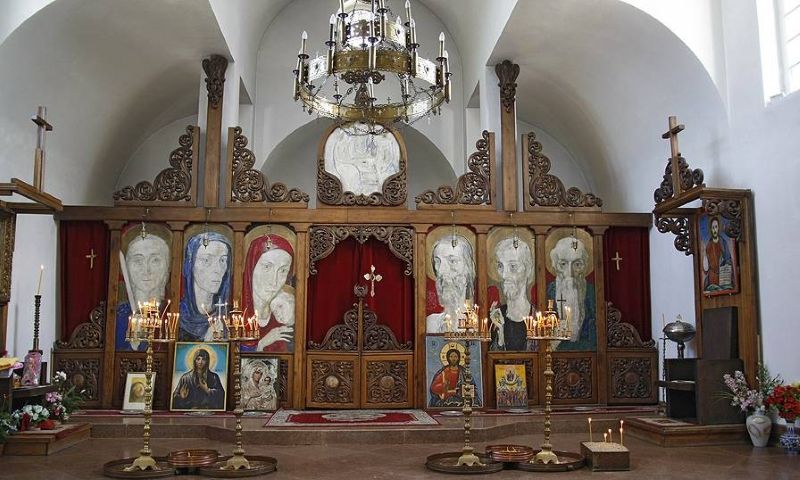
Temple of St Petka in Bulgaria, a church dedicated to Baba Vanga
- Later, on her request, a good portion of the income earned from the church was donated for charitable causes across the world.
- Thereafter, the Bulgarian Orthodox Church obligated the depiction of Vanga as an angel in and out of the church, as it went against Orthodox canon law, which allowed only the saints to be depicted on the walls of a church and not a human.
- The priests of the Orthodox Church initially refused to consecrate the church; however, after they blessed the church after they were forced to do so by regional politicians and affluent families who threatened to cut off their funding.
- After she passed away in August 1996, Baba Vanga was buried near her church. Her last rites were attended by many people.
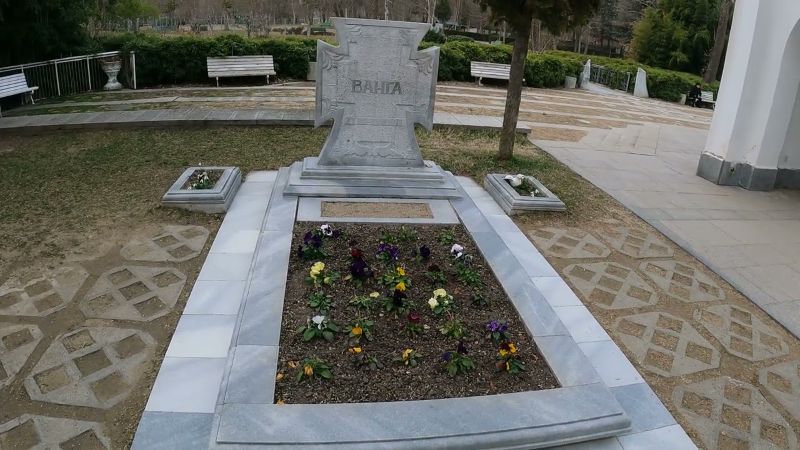
A picture of Baba Vanga’s grave
- Baba Vanga made several predictions when she was alive. Some of the notable ones include a surge in natural calamities like earthquakes between 2025 and 2028, the eradication of world hunger by 2030, the rise of ISIS, as well as the 9/11 attacks on the US.
- People who were close to her have often claimed that, unlike Nostradamus, who had written his predictions in a book, Baba Vanga did not record her predictions, and most of the predictions that are claimed to be made by her were not actually predicted by her.
- Locals named her Baba Vanga because of her divine powers and the love and respect they had for her. Baba means grandmother, and Vanga was derived from the real first name Vangeliya.
- As a tribute to her, many Russian producers made documentaries based on her life and predictions. Some of the popular shows and documentaries are What Vanga was silent about, Vanga: the seen and unseen world, Vangelia, and Vanga the Great
- In 2015, Russian researchers began an online project named The Great Encyclopedia of Vanga, which is dedicated to her.